Challenge
Group plans lived across chats, restaurant apps, calls, and calendars. Every new decision created another round of coordination.
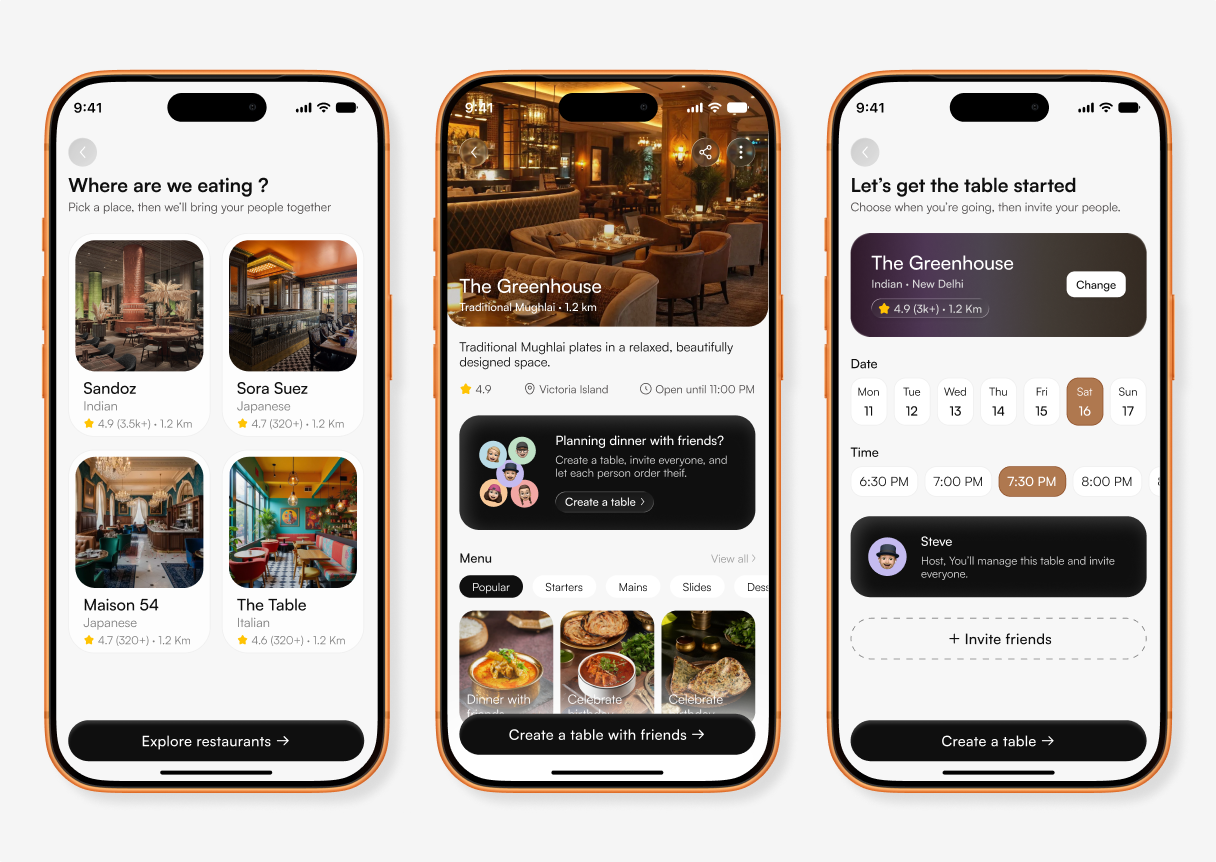
Table Club is a social dining app designed to make planning group dinners easier. It brings restaurant discovery, dinner planning, invitations, RSVPs, table management, and updates into one shared experience, replacing scattered conversations and coordination with a structured social flow.
A closer look at how Table Club brings people together.
Explore the experience yourself
Everyone wants to meet. Nobody wants to organise it.
I designed Table Club around the messy middle between “we should go out” and actually sitting at the table, making it easier to choose a place, get everyone on board, and keep the plan moving.
A group dinner rarely breaks at the restaurant. It breaks somewhere between “let’s go out” and everyone actually showing up. Finding a place is easy enough, but deciding where to go, finding a time that works, inviting everyone, collecting responses, and handling changes often means a trail of messages and manual follow ups.
When “Let’s Grab Dinner” Became a Coordination Problem
Turn group dining from a scattered conversation into one shared experience where plans are easy to create, decisions are clear, and everyone stays aligned.
Table Club started with a simple observation: getting friends to agree on dinner can be harder than choosing where to eat. I explored the space between “we should go out” and actually sitting at the table, designing a shared experience that brings discovery, planning, invitations, and decisions into one continuous flow.
Group plans lived across chats, restaurant apps, calls, and calendars. Every new decision created another round of coordination.
A social dining experience that turns a loose idea into a shared, actionable dinner plan.
Designed the experience around the life of the plan, giving the host control while keeping every guest informed as the dinner evolves.
Less coordination, fewer unanswered questions, and a clearer path from “Let’s go out” to “See you at the table.”
The challenge wasn't simply helping people find a restaurant. It was understanding that a group dinner is a shared decision, with different people entering the experience at different moments.
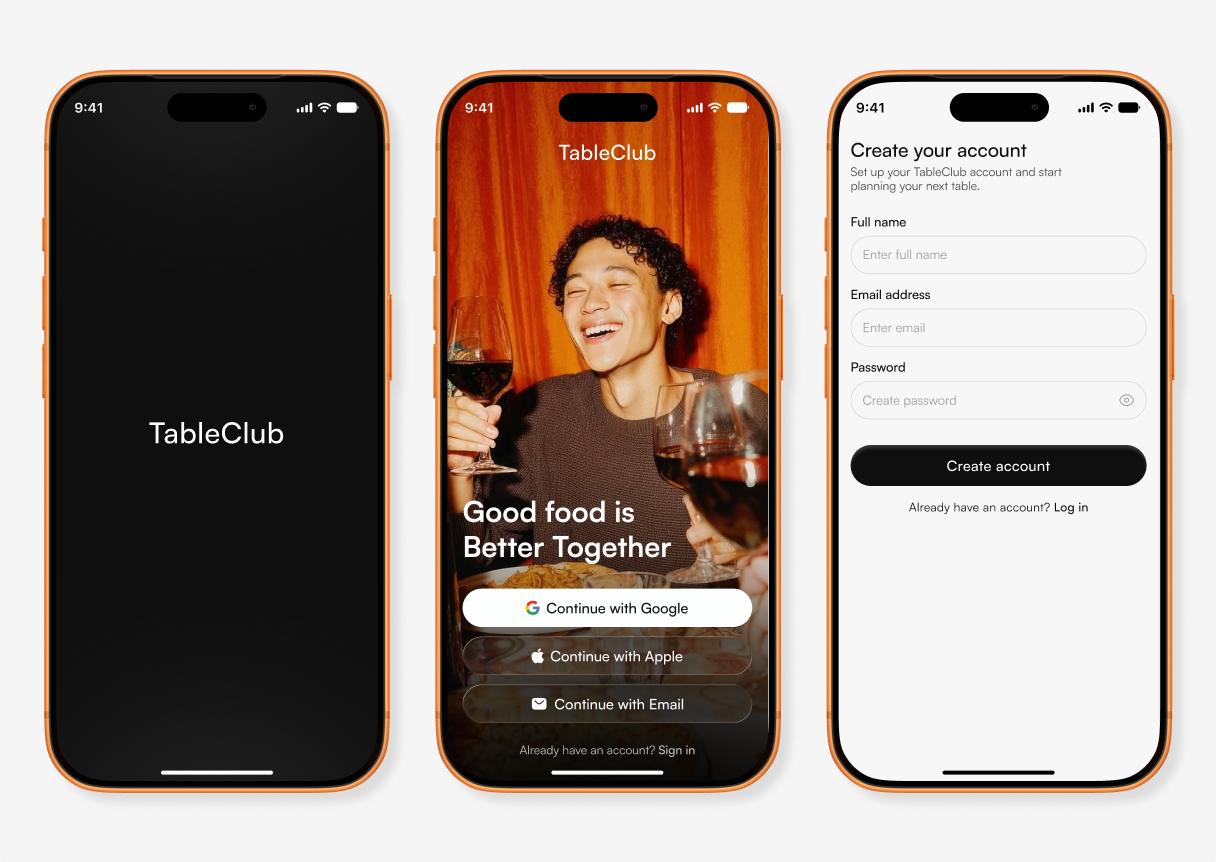
I kept the entry flow lightweight and social, making it feel like joining an experience rather than setting up an account. Google, Apple, and email offer flexibility, while sign up and login stay in one simple flow.
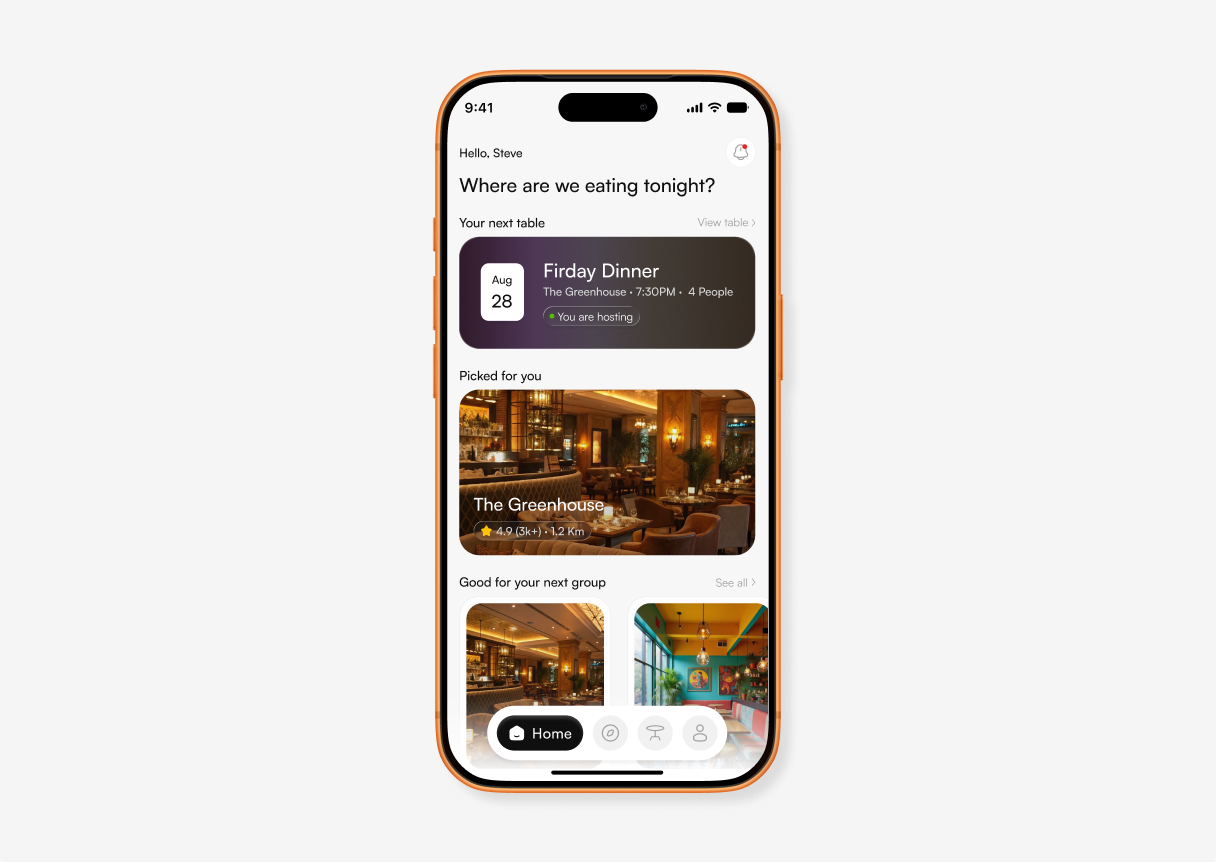
I designed the home screen around what the user is likely to do next, rather than treating it as a
restaurant catalogue. Upcoming plans come first, followed by personalised picks and group friendly
recommendations.
Plan → Personalised picks → Group recommendations → Discover
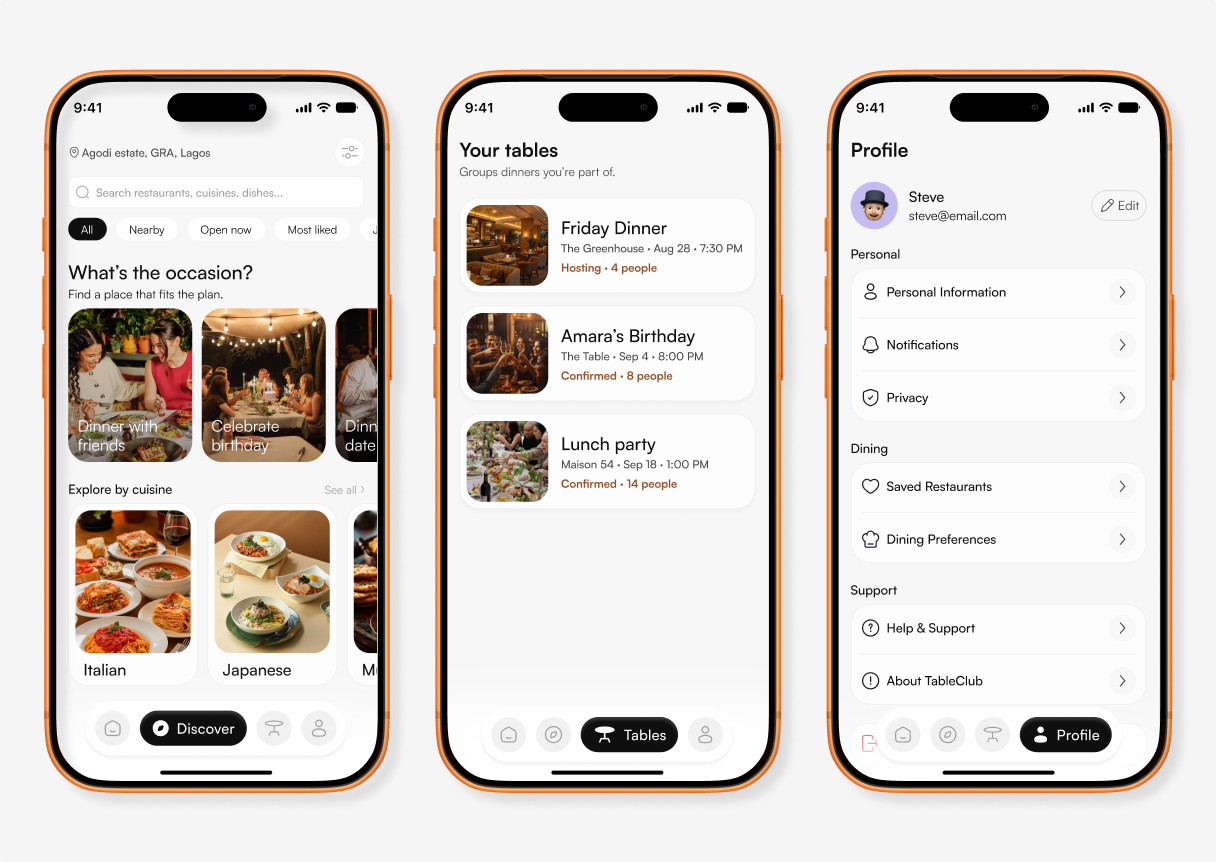
I designed these spaces around three clear intents: discover, manage plans, and manage
preferences,
giving each one a distinct purpose.
Discover → Explore restaurants by occasion, cuisine, and location.
Tables → Keep upcoming dinners, guests, and confirmation status in one place.
Profile → Manage personal details, dining preferences, saved restaurants, and support
settings.
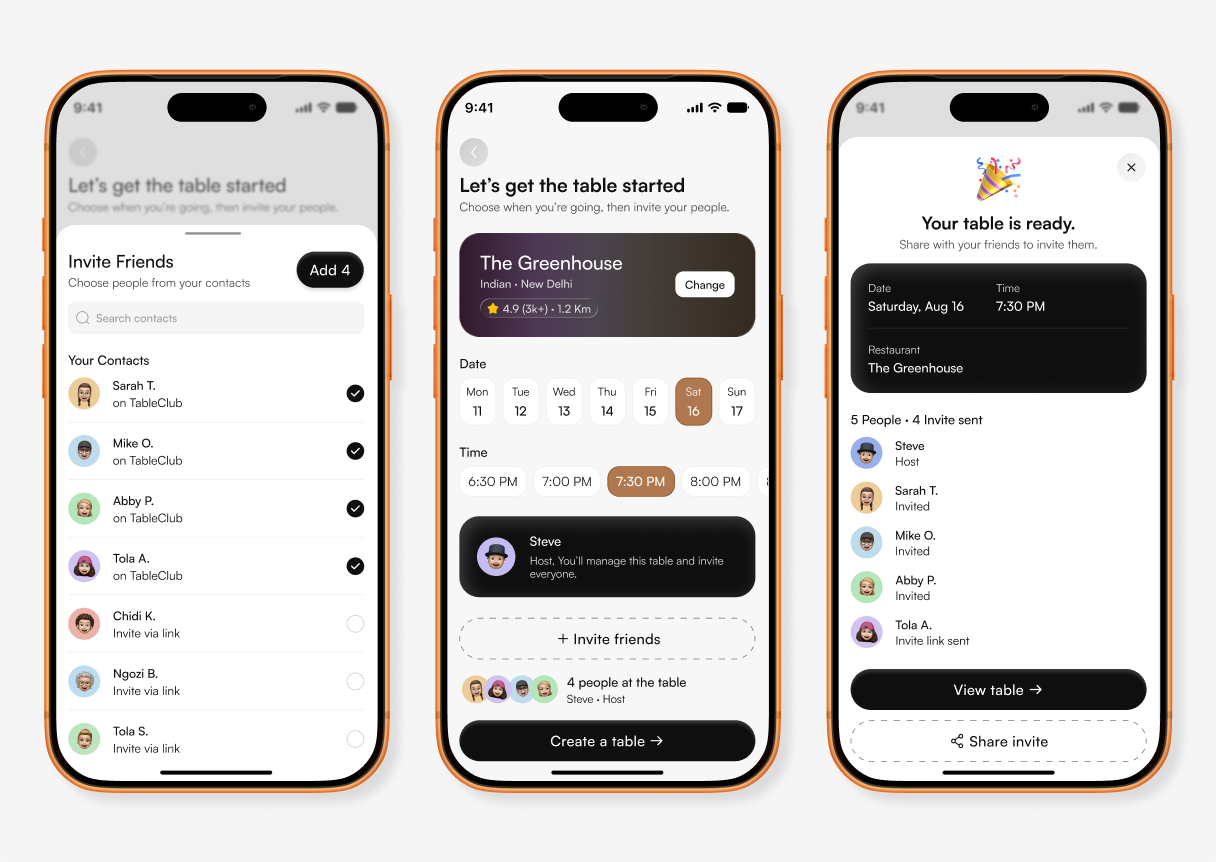
Once guests are selected, the focus shifts from creating the plan to activating it.
Invitation status stays visible, while the confirmation state clearly shows where, when, who, and
what’s next.
Select guests → Set the plan → Create → Share → Manage
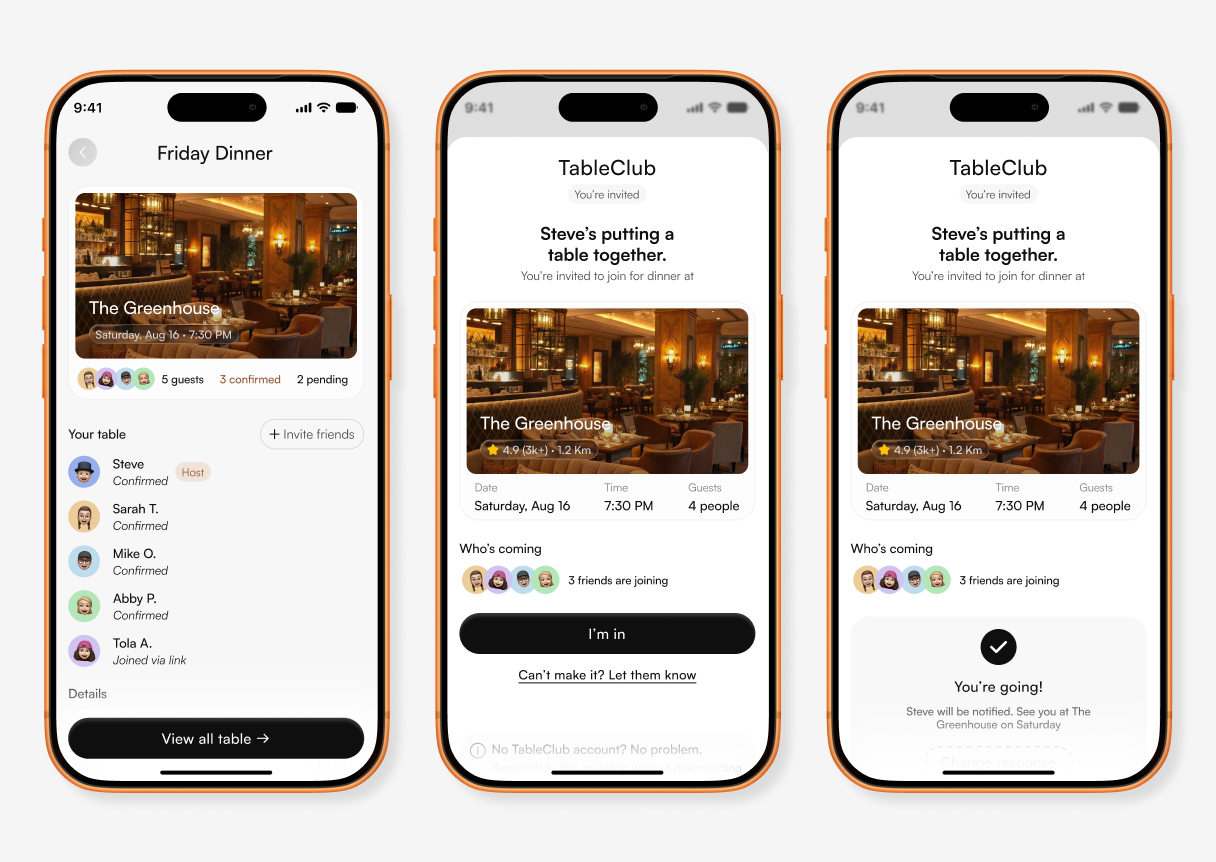
I designed the RSVP flow around one simple question: “Am I going?”
Guests see the key details upfront, then choose to join or keep their decision open.
The web experience also lets guests respond without the app.
See the plan → Know who’s coming → RSVP → Stay flexible
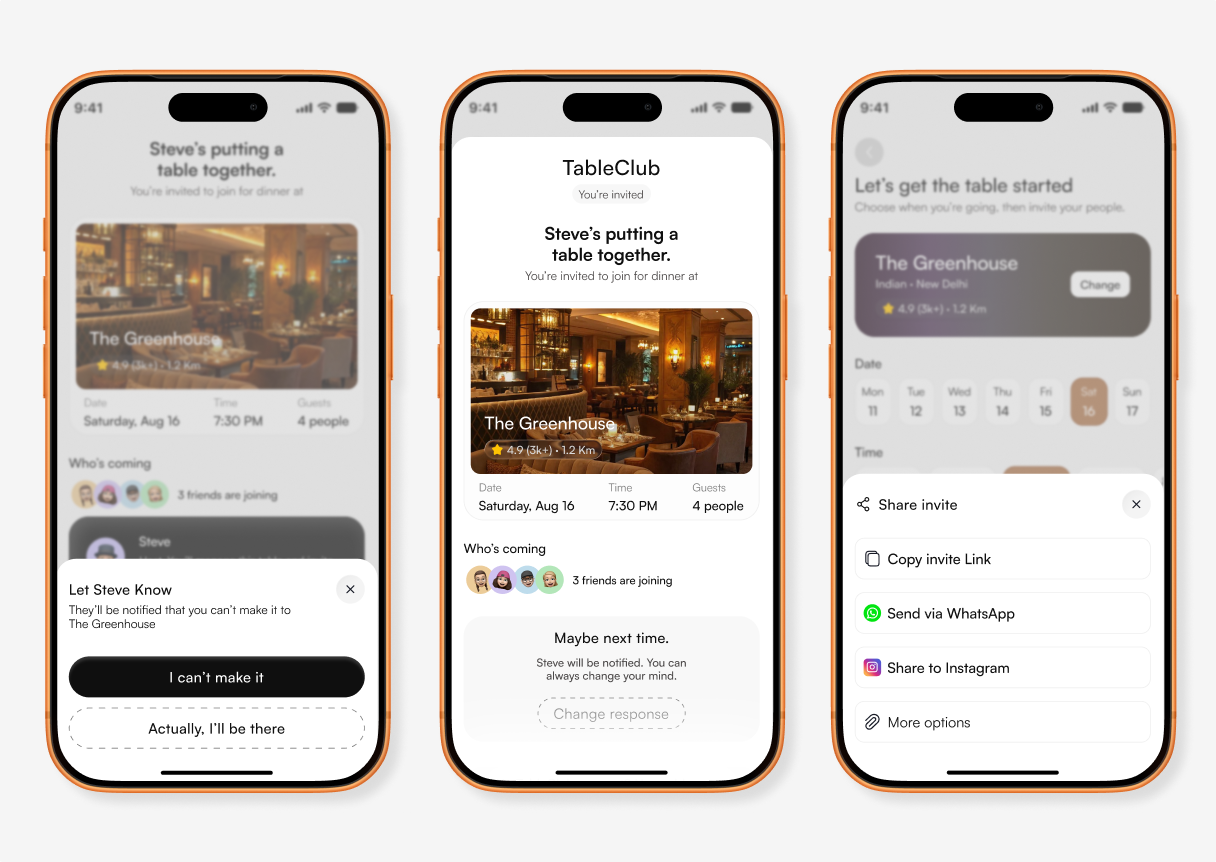
The experience continues after RSVP. I designed simple interactions for changing responses,
sharing plans, and managing preferences without adding unnecessary complexity.
Change your mind → Share the plan → Shape future recommendations
These projected outcomes reflect how Table Club's design could make group dining easier, clearer, and less dependent on manual coordination.
Fewer steps from discovering a restaurant to creating a dinner
Less back and forth between hosts and guests during planning
Faster RSVP decisions through clearer plan information
Shared experience for discovery, invitations, RSVPs, and table management
Projected design targets based on the problems identified during the project, not measured production results.
A dinner doesn't end when the table is booked. The experience needs to support changes and RSVPs.
The product should keep everyone informed instead of making one person manage the plan.
Clear status, ownership, and next steps can make group planning feel much simpler.
Experience the product and see how everything comes together.