30–40%
Reduction in routine manager intervention
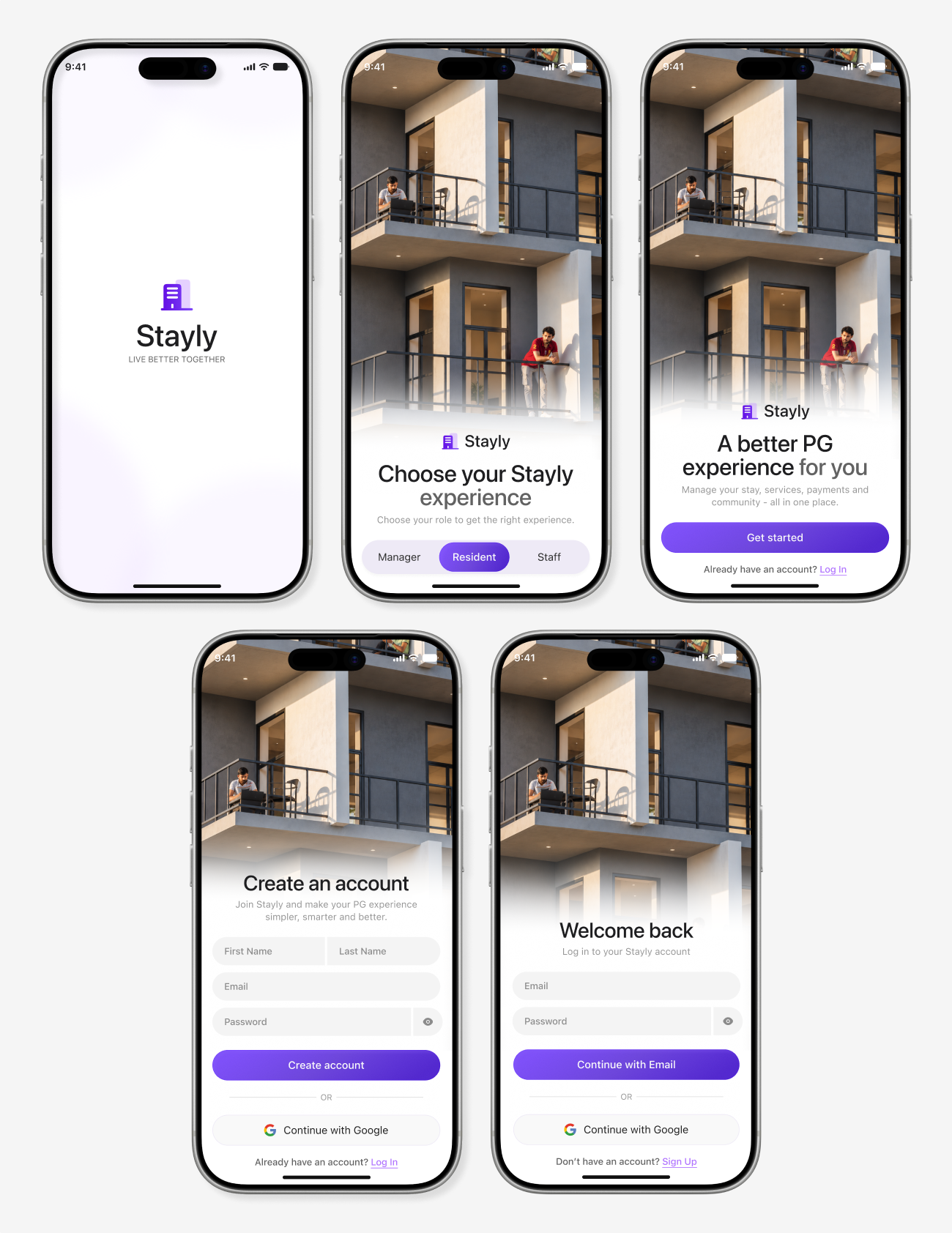
Stayly is a PG and hostel management app designed to make everyday living and operations simpler. The product connects residents, managers, and staff in one experience, replacing scattered requests, manual follow ups, and paper based processes with a more structured digital system.
From rent to repairs, everything you need to feel at home in one place.
Take a closer look. Explore it yourself.
Residents were leaving within the first 30 days, and the problem went beyond the room.
I explored how a better digital experience could simplify everyday PG life, from requests and visitors to meals, payments, and communication, while helping managers handle operations without becoming a bottleneck.
Stayly started with a simple question: why are residents leaving so early? I mapped the experience across residents, managers, and staff, then redesigned the system around one idea: routine work should move automatically, while people step in only when needed.
The PG experience was built around accommodation, but the problems residents faced every day were much bigger than the room itself. Requests, visitors, meals, payments, complaints, and communication often depended on manual coordination.
When Everyday PG Problems Started Becoming Reasons to Leave
Create a connected PG management experience that improves the resident experience while reducing unnecessary operational work for managers.
The problem wasn't that users had too many features. It was that residents and managers approached the same product with completely different needs.
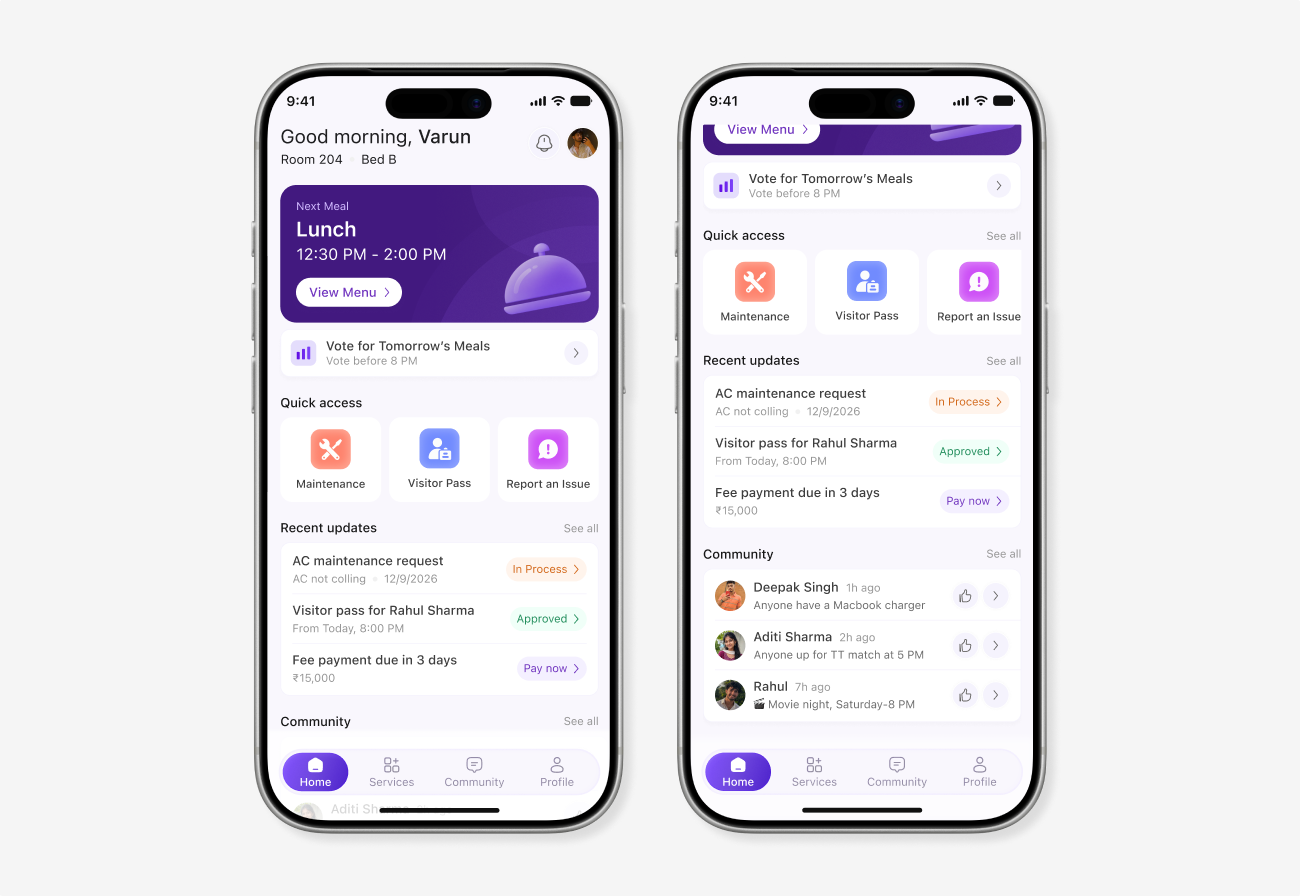
The resident home screen brings the most important everyday needs into one place, from the next meal and quick actions to request updates, payments, and community activity. The focus was to make the home screen useful at a glance without overwhelming the resident.
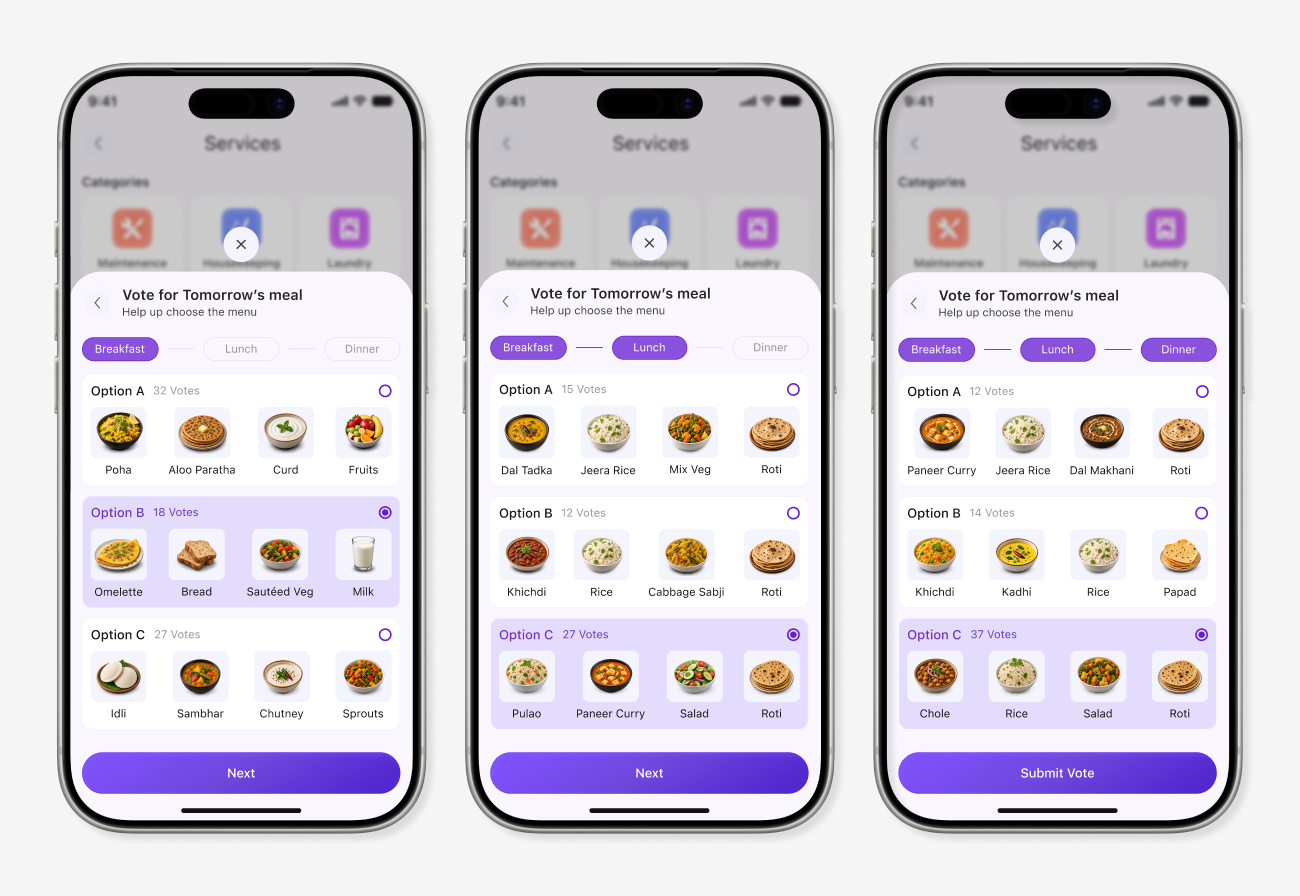
A simple voting flow lets residents choose tomorrow’s breakfast, lunch, and dinner,
with clear options and live vote counts. The logic goes beyond simply picking the winner: votes indicate
preference, while a rotation system maintains variety.
How it works :
Votes → Preference score → Check meal history → Apply rotation rule → Final menu
The highest voted meal gets priority, while meals that have been skipped repeatedly receive a higher chance of being included in upcoming menus. This prevents the same popular dishes from winning every time while still keeping resident preferences at the center.
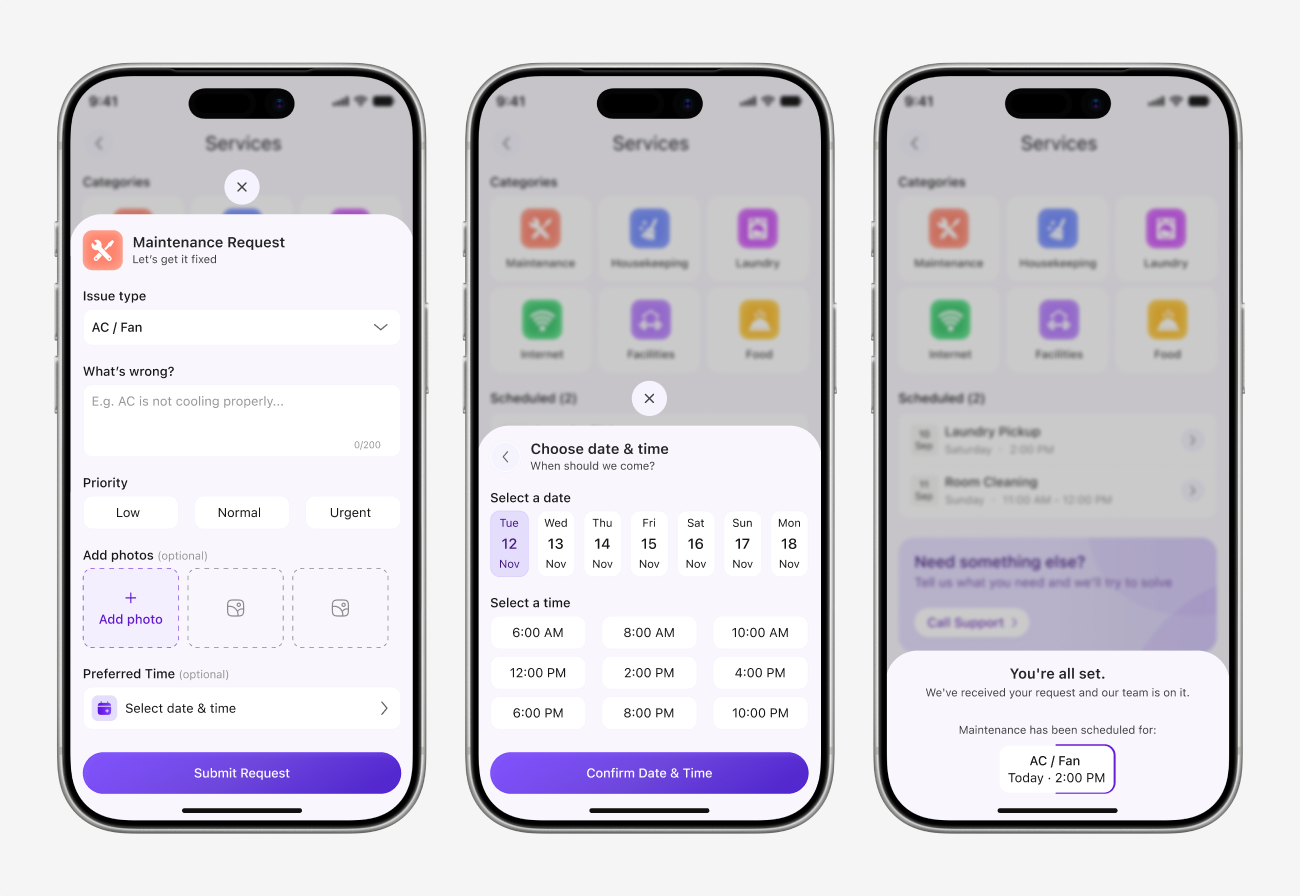
A structured maintenance flow helps residents explain the issue, set its priority, add photos, and choose
a
convenient time for the team to visit. The request then ends with a clear confirmation, so residents
always
know what was submitted and when it will be handled.
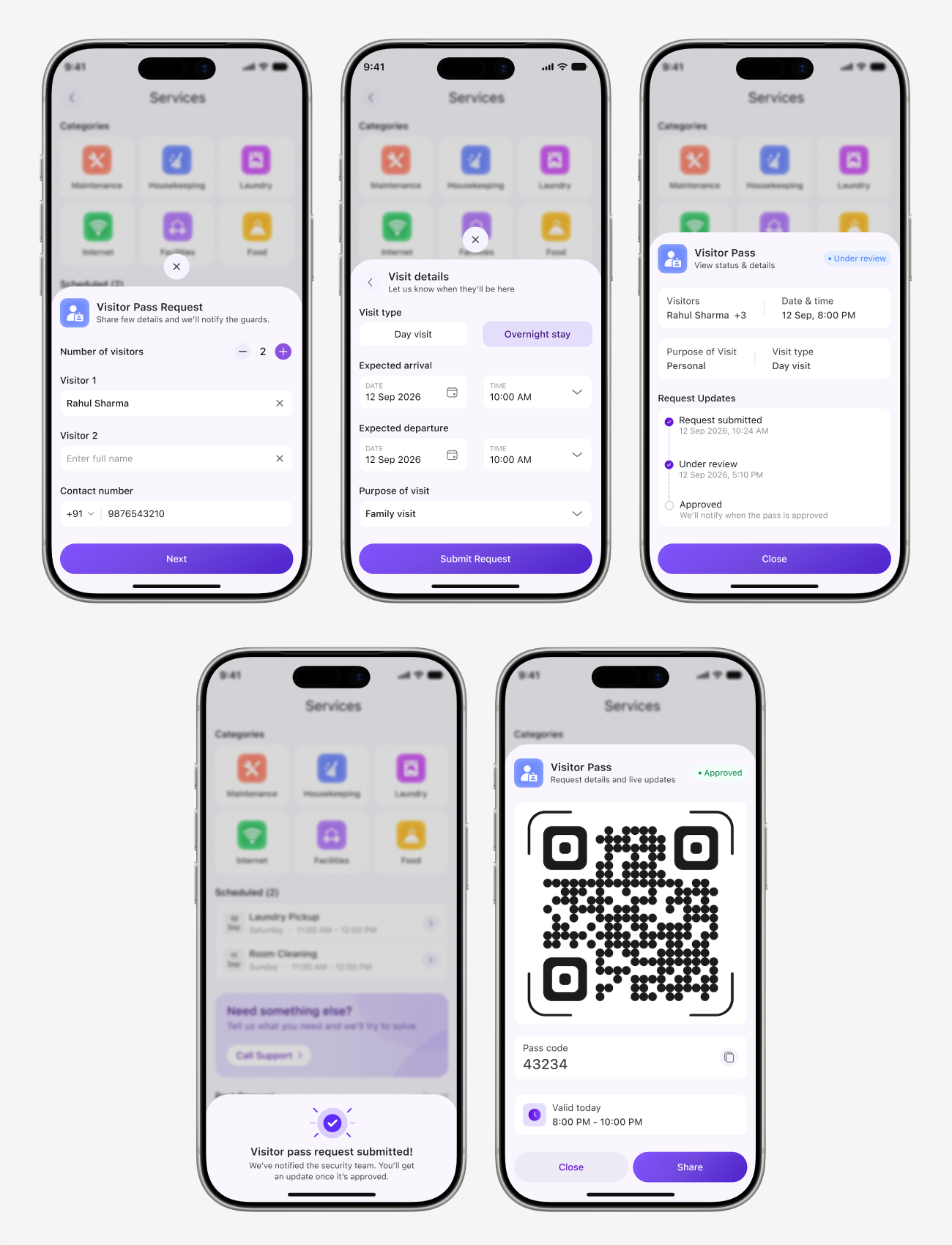
I treated visitor management as more than a form submission. The flow gives residents control over who is visiting, when they are arriving, and why, while creating a clear approval trail for staff. Once approved, the request becomes a time bound digital pass, giving security a simple way to verify entry and giving residents confidence that the process is handled end to end.
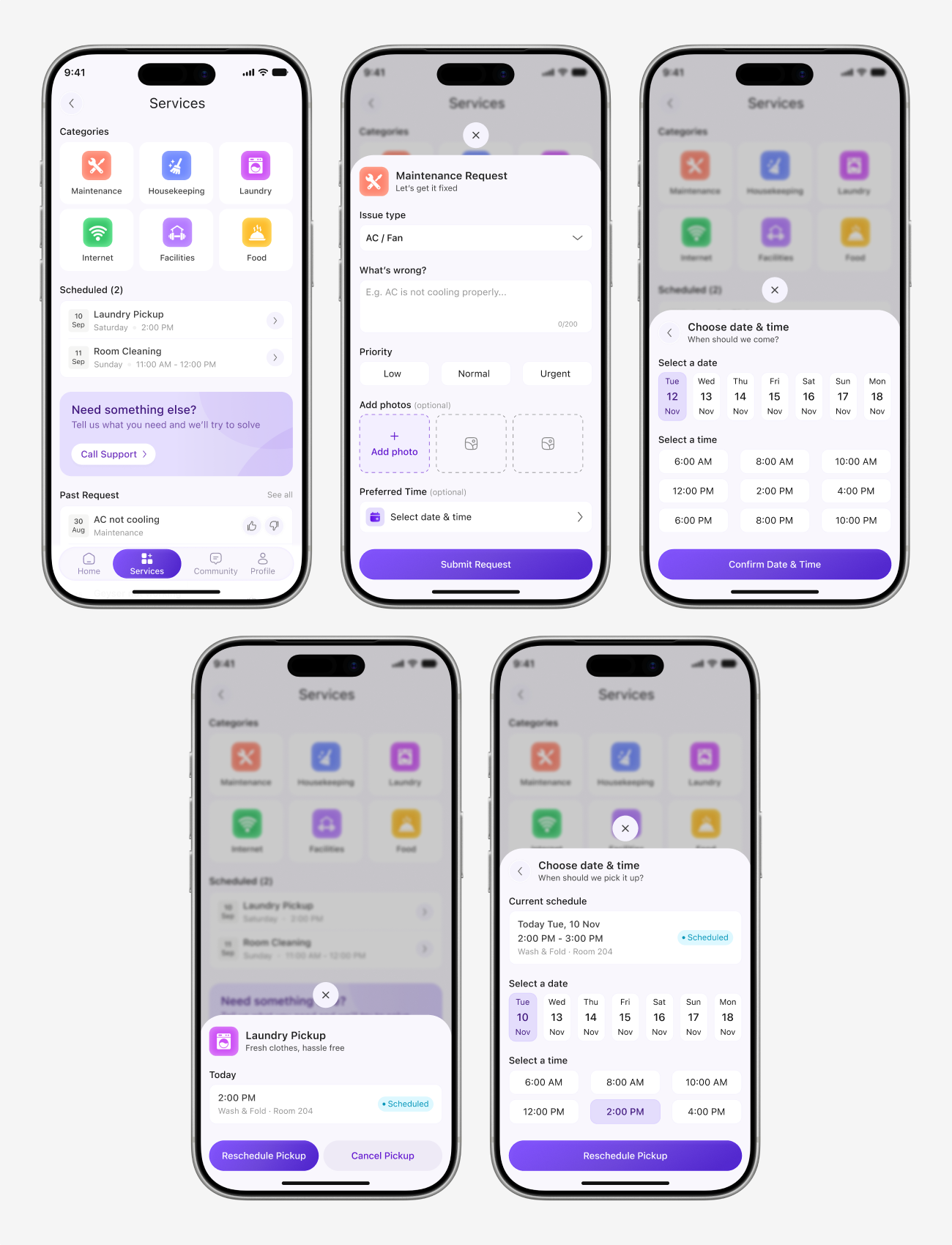
A connected service flow lets residents choose what they need, provide the right details, add photos when useful, and schedule a convenient time. Instead of relying on calls or manual follow ups, the system keeps every request visible from submission to completion.
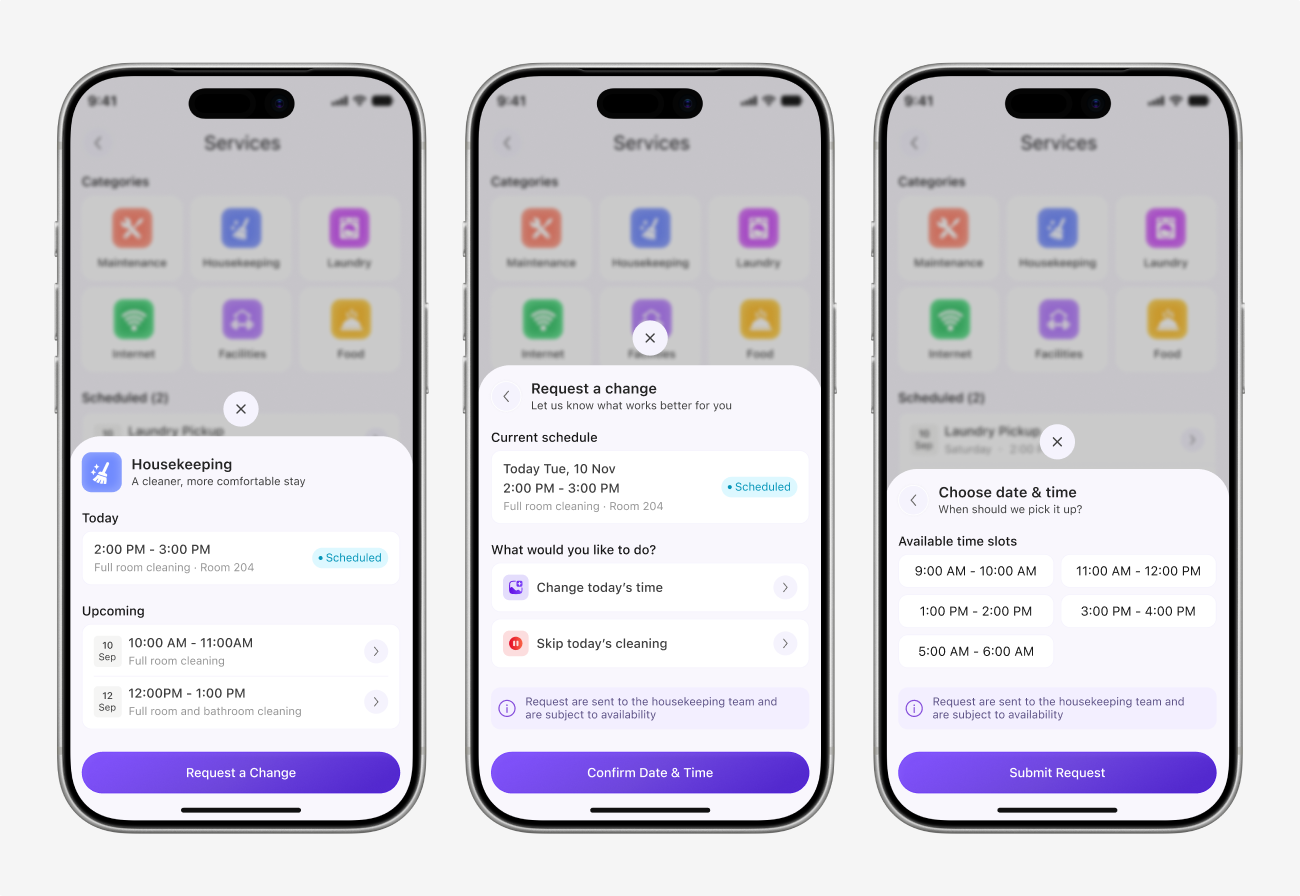
Housekeeping shouldn’t feel like a fixed appointment. I designed the flow around the resident’s immediate need to change what’s already scheduled, making rescheduling and skipping clear while keeping current and upcoming bookings visible. Time slots appear only when needed, giving residents control without adding unnecessary complexity.
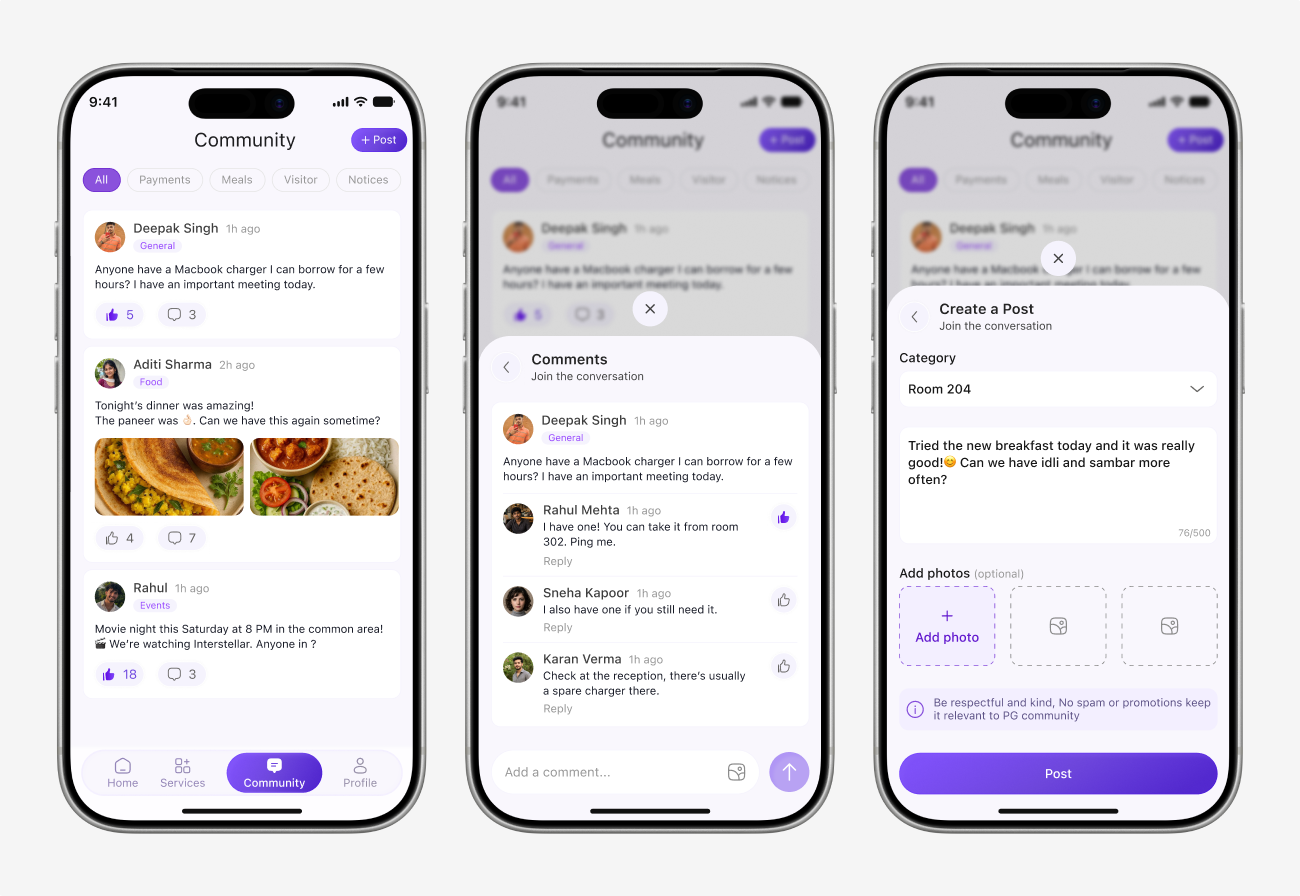
The Community space gives residents a lightweight place to ask for help, share updates, discuss meals, and discover activities around the PG. I kept it useful and local with categories, comments, reactions, and photo sharing, helping residents connect through the small everyday moments that make a PG feel more like home.
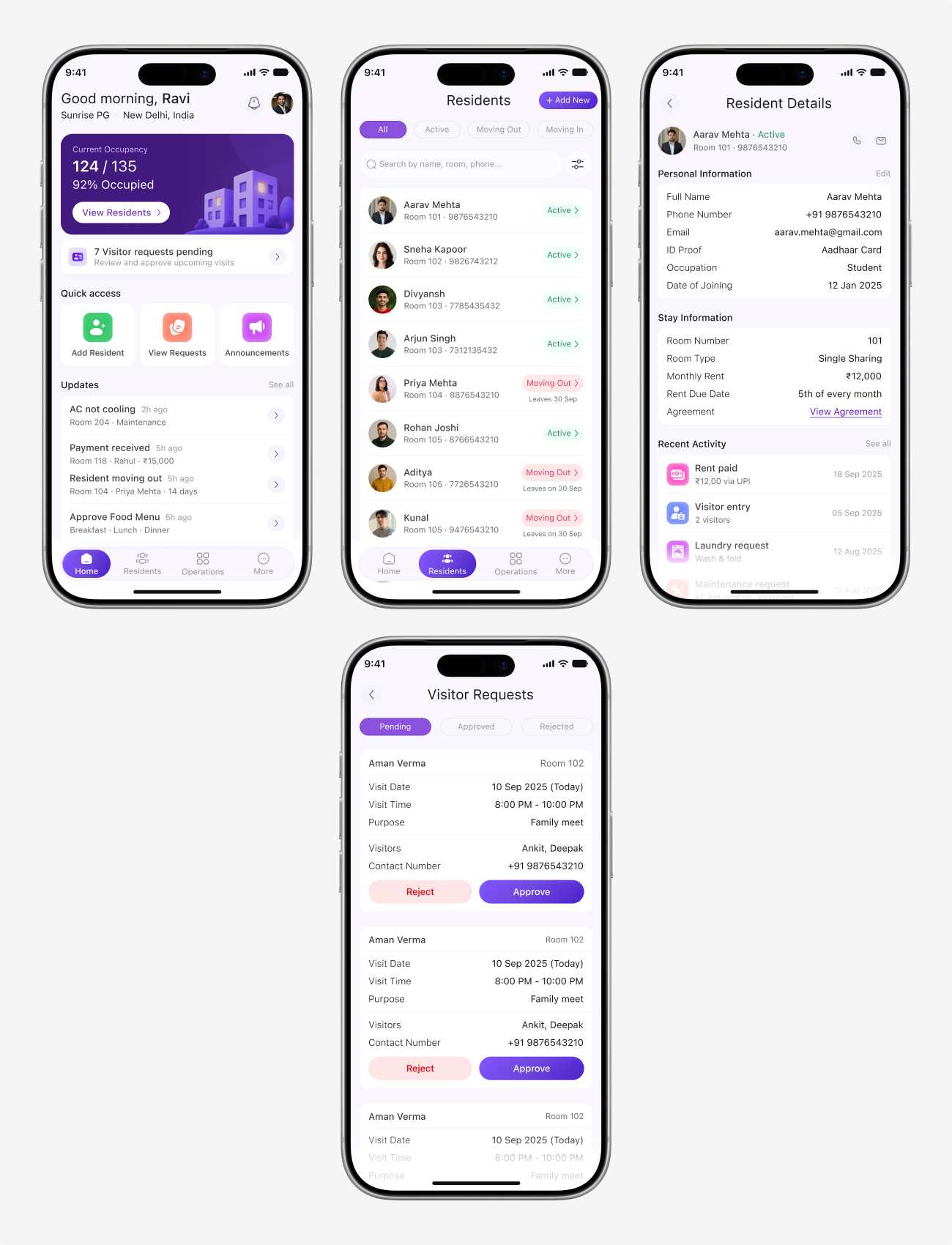
The manager experience brings property overview, residents, and approvals into one workflow. Key information surfaces automatically, keeping managers focused on decisions rather than administration and reducing unnecessary back and forth.
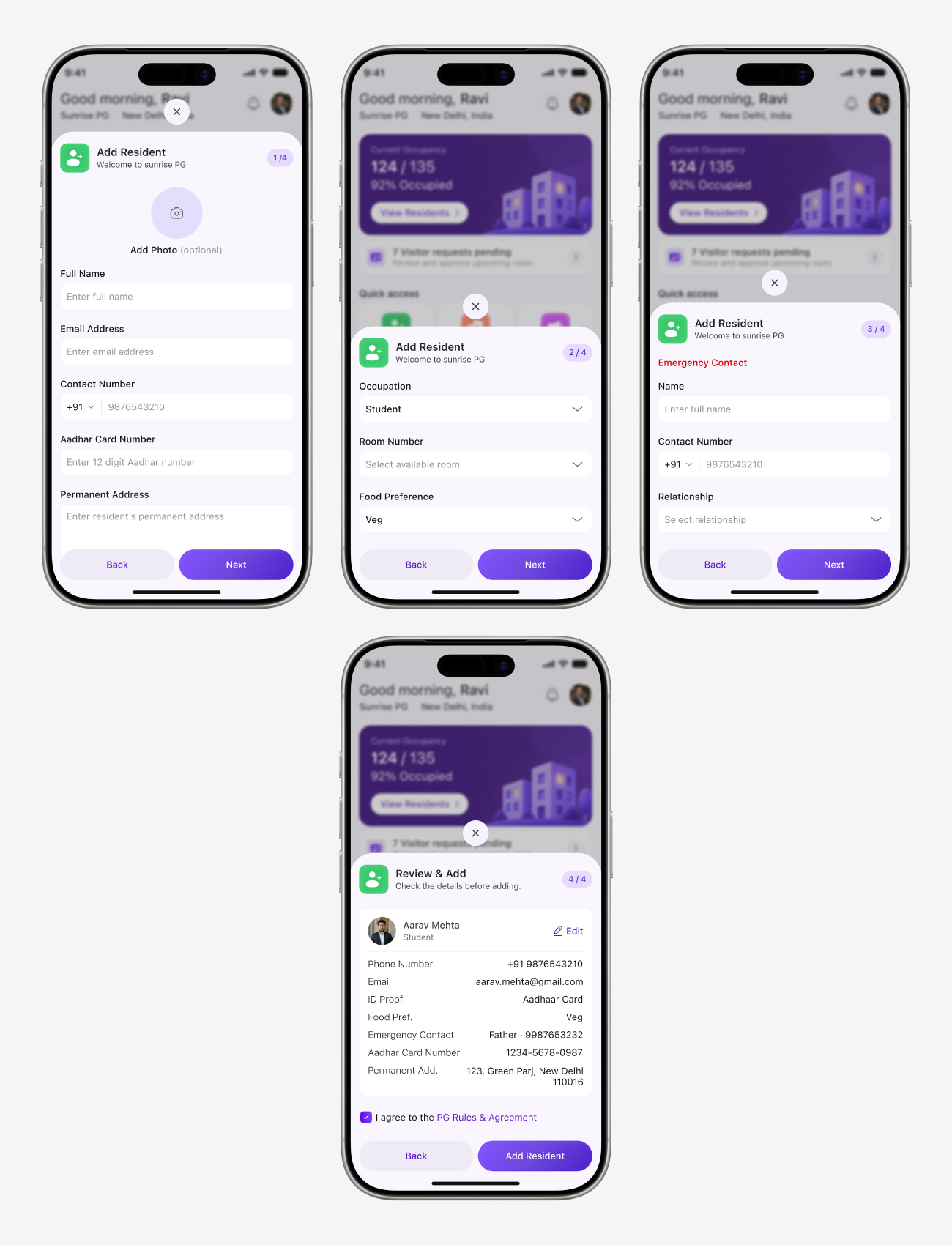
I split resident onboarding into four focused steps covering personal details, stay information, emergency contact, and preferences. A final review lets managers verify everything before creating the record,reducing errors and replacing the traditional paper form with a simpler digital workflow.
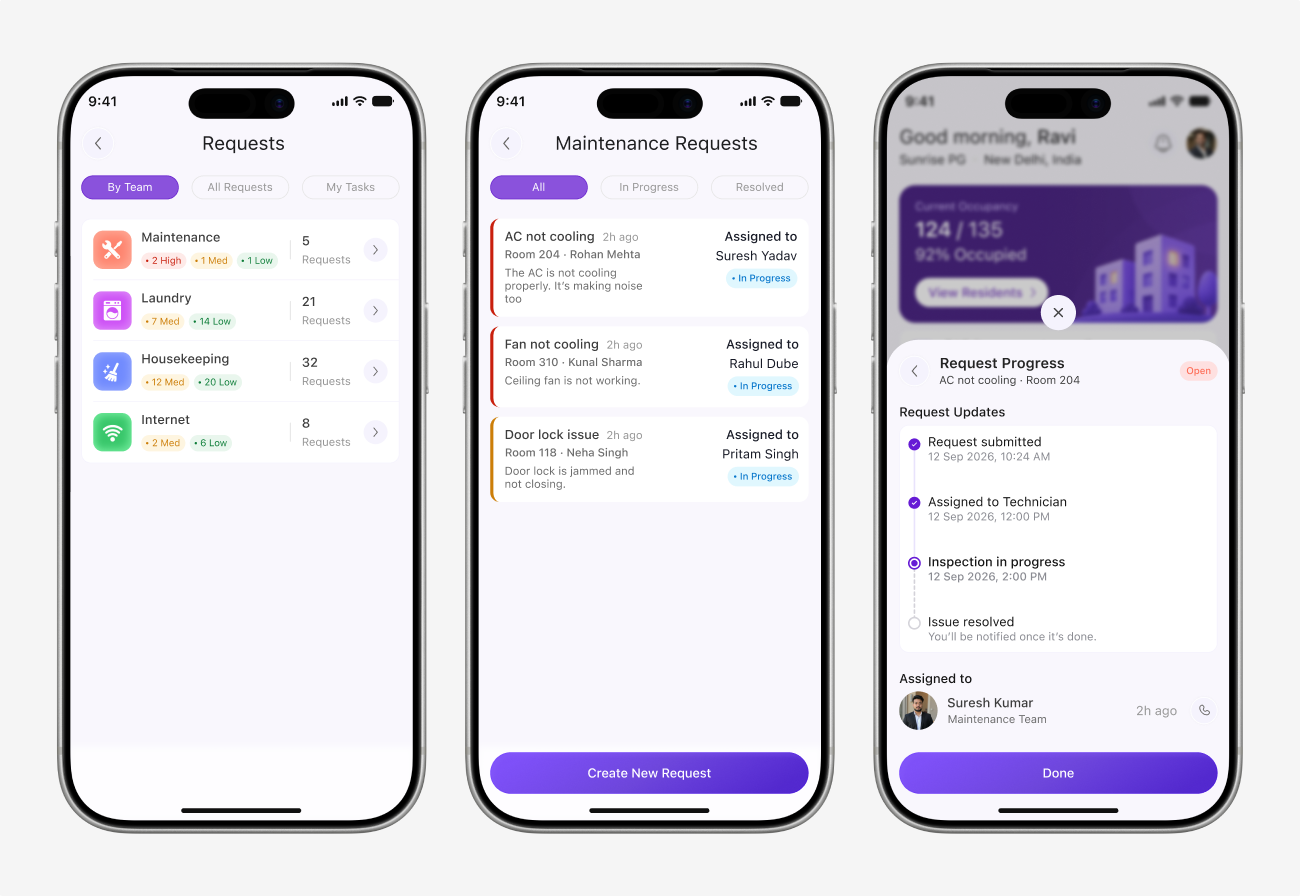
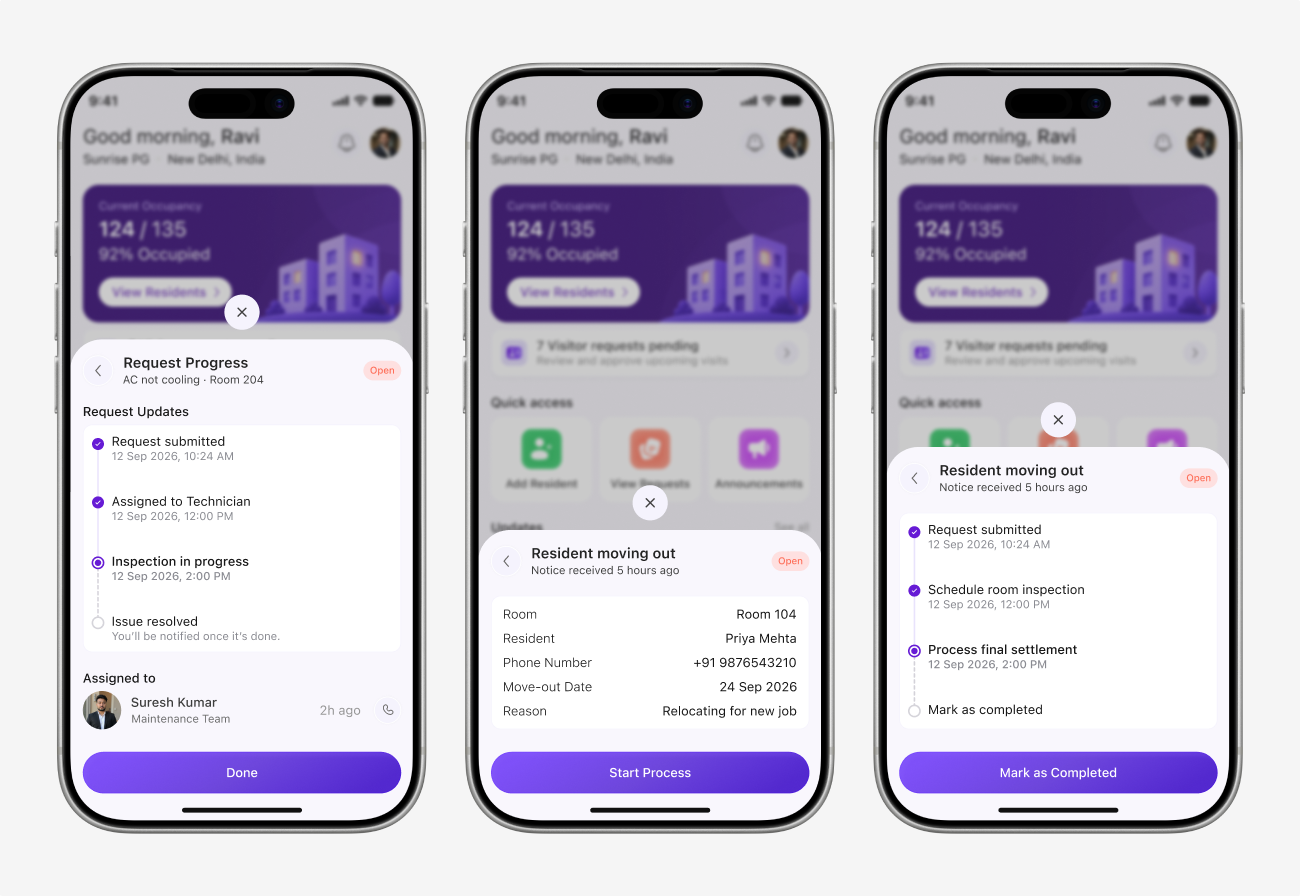
The manager side brings requests, maintenance tasks, and announcements one place. Requests are grouped by team and priority, giving managers a quick view of what needs attention while keeping operational work and resident communication clearly separated.
The manager experience is built around exception handling, not constant monitoring.Clear request stages and timelines show progress, ownership, and next actions, so managers can step in only when a decision or intervention is needed.
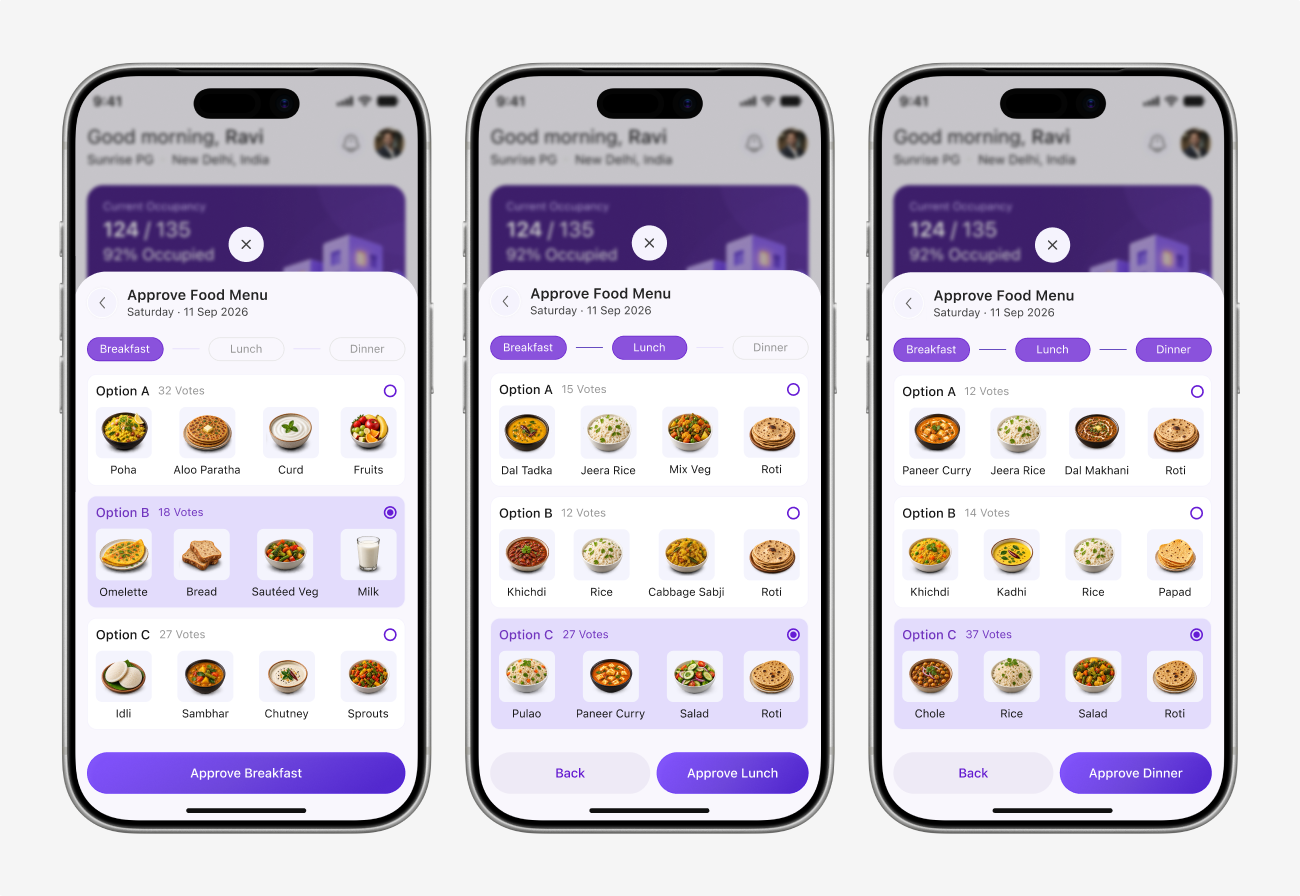
The meal flow gives managers clear visibility into resident preferences before approving the final menu. I kept breakfast, lunch, and dinner as focused steps, creating a simple loop: Resident votes → Manager reviews → Menu approved → Residents informed, while leaving room for operational constraints.
These projected outcomes reflect how Stayly's design could improve operational efficiency and the everyday resident experience.
Reduction in routine manager intervention
Faster handling of resident requests through clear ownership and tracking
Increase in resident participation across meal voting and community features
Reduction in manual follow ups for visitors, housekeeping, and maintenance
Understanding what users need to do matters more than simply listing features.
Clear roles, ownership, and states can make a complex product feel simple.
Designing connected workflows creates more value than solving screens in isolation.
Experience the product and see how everything comes together.